
How many restrooms does a marathon or race need?
There's no single number, because a 5K loop and a point-to-point marathon load restrooms differently. Start with how many porta potties do I need as a baseline, then adjust for your course. A start line with 500 runners waiting to corral needs more units than a finish area people pass through in minutes. Aid stations at mile 6 and mile 13 need at least one standard porta potty rental each, plus a place for volunteers to wash up. OSHA 1926.51(c) sets construction ratios, not race ratios, but it's still the closest reference point event planners use: one toilet for every 20 people is a workable starting ratio for a static crowd. Runners aren't static, so most race directors run tighter. If your course crosses through Henderson on closed streets, confirm placement in the public right of way with the city before delivery day. For events with a health inspection or a permit review, our porta potty permit requirements page walks through what to expect. Spectator zones need their own count separate from the runner corridors. A portable restroom rental plan that treats spectators and racers as one pool almost always comes up short at the finish line.
What restrooms work best for a race start line?
Start lines need volume and speed, not luxury. A standard porta potty rental holds 60 to 70 gallons and stands about 92 inches tall, and clusters of ten to twelve units clear a corral fast. Standard units run 130 to 500 dollars a week depending on count and duration, which covers most Saturday morning races without a monthly commitment. For VIP tents, sponsor areas or a wedding-adjacent charity run, a deluxe flushable porta potty adds a flush handle and a nicer interior for 150 to 290 dollars a week. Every cluster needs accessible units too: ADA Standards 213.2 requires at least 5 percent of a cluster be accessible, never fewer than one. Our ADA accessible porta potty units meet the 60 inch turning circle called out in ADA Standards 304.3.1 and the 32 inch clear door opening in ADA Standards 404.2.3, so wheelchair racers and spectators aren't stuck hunting for the one unit that fits. Larger races staging near Henderson sometimes ask about power for timing tents and speaker towers nearby; if your course needs a temporary power pole for a finish-line PA system, ask your crew how to brace a temporary power pole before delivery, since the usual method sets the base below grade, back-fills with compacted soil, and guy-wires it at two points away from runner lanes so wind and foot traffic can't tip it during the event.
Where should restrooms be placed on a race course?
Placement follows the runner flow, not the shortest driveway. Our porta potty placement guide covers ground clearance and slope, but races add a wrinkle: units can't block a runner lane or a wheelchair-division route, and ADA Standards 302.1 requires the ground surface under and around each unit be stable and slip resistant, which matters on grass infields. A finish chute needs restrooms set back at least a few feet from the barricade line, since OSHA 1926.202 governs barricade setup on job sites and race organizers borrow the same clearance logic for crowd barriers. If your race runs near a construction zone or shares a lot with a job site, check our temporary fence rental and crowd control barrier rental pages, since race day sometimes means fencing off a staging area same as a work site would. Henderson races that finish downtown may need units delivered before dawn road closures take effect, so confirm delivery windows early. For multi-day events, a restroom trailer rental at the finish festival area gives runners and families a nicer option than a standard bank of units, and our event restroom rental page breaks down trailer sizing by expected headcount.
| unit | duration | low | typical | high |
|---|---|---|---|---|
| standard | weekend | 125 | 250 | 400 |
| standard | week | 130 | 200 | 500 |
| ada | weekend | 199 | 240 | 300 |
| deluxe | week | 150 | 250 | 290 |
How far in advance should we book race restrooms?
Book as soon as your course map and expected headcount are final. Races draw from the same weekend inventory as weddings and festivals, so popular Henderson dates fill early. A request a quote with your runner count and route gets you an accurate unit plan fast.
Do we need separate restrooms for volunteers and staff?
Not always, but it helps at long races. Volunteers working aid stations for six-plus hours benefit from a dedicated unit near their station instead of walking to the nearest runner cluster, especially at mile markers far from the start.
Can restrooms be moved mid-race if the course changes?
Units can be repositioned before the event, but not during active racing. Lock in your course map first, then confirm final placement 48 to 72 hours out so our crew can stage everything before road closures begin.
What about handwashing at aid stations?
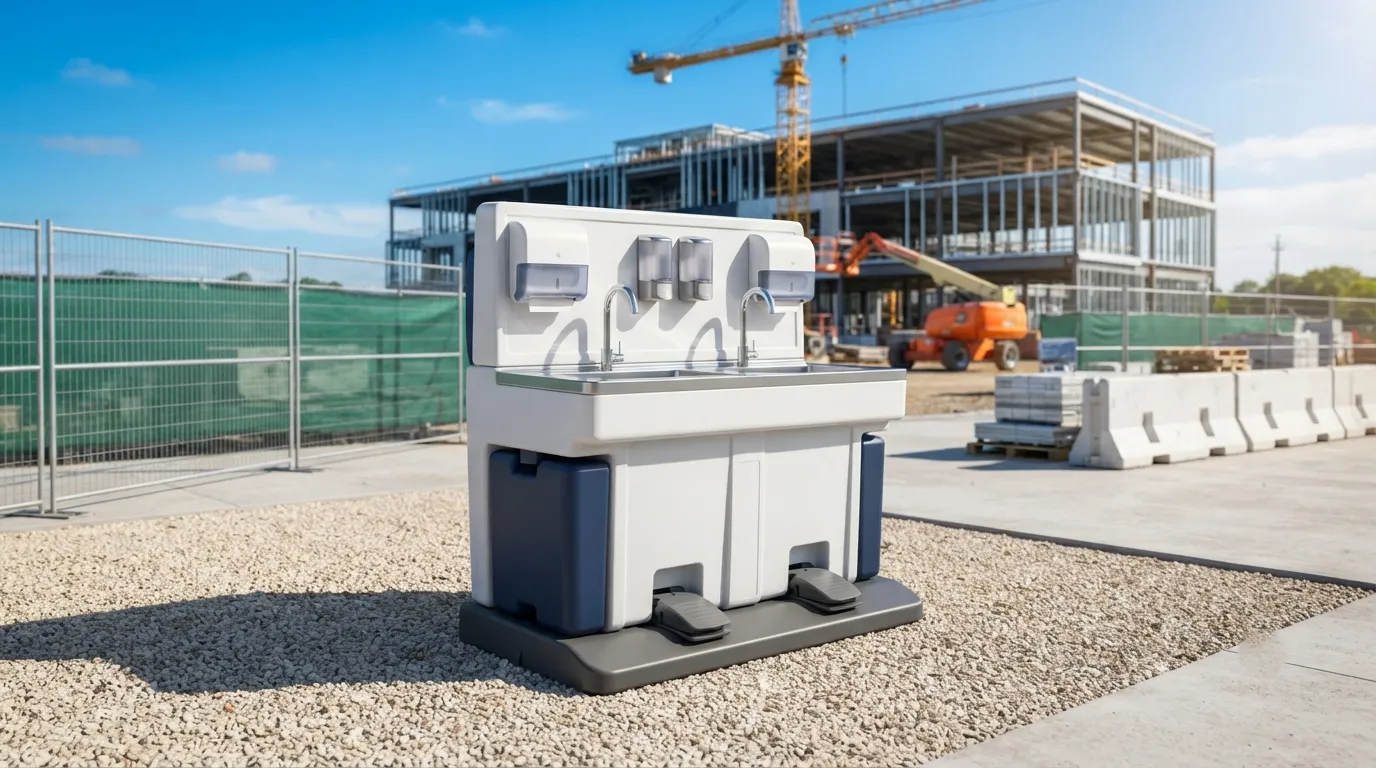
Aid stations handling food or drinks need handwashing, not just sanitizer, since 29 CFR 1910.141(d)(2) requires soap and towels or a drying device. Our handwashing station rental page covers standalone units that pair well with aid station tents.
Do marathons need accessible restrooms at every mile marker?
Not every marker, but your start, finish and any staffed aid station should each have at least one accessible unit under ADA Standards 213.2. Spread them across the course rather than clustering all of them at the finish.
Next step
Get a delivery date
Tell us the address, the dates and the headcount. We size the order and confirm the route.